
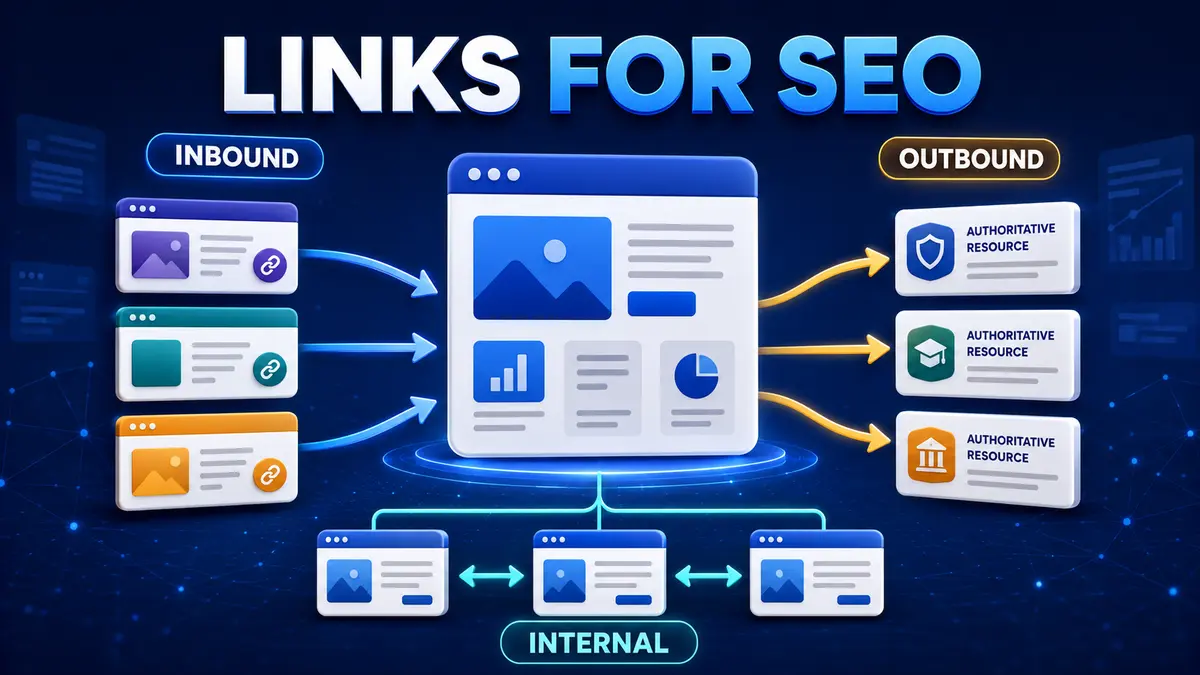
Inbound and Outbound Links for SEO
Links remain an important part of search engine optimisation, but inbound and outbound links serve different purposes. A strong SEO strategy should use both naturally and selectively.
What Are Inbound Links?
Inbound links—also known as backlinks—are links pointing to your website from other websites.
A relevant link from a reputable website can pass authority, traditionally called PageRank, to the page receiving the link. Quality backlinks may help search engines see your website as trustworthy and authoritative.
The benefits can be long-lasting, especially when the link:
- Comes from a reputable and relevant website
- Appears naturally within useful content
- Points to a genuinely valuable page
- Uses descriptive but natural anchor text
- Remains live over time
However, backlinks do not guarantee higher rankings. Search engines consider content quality, relevance, technical performance, user experience and many other signals.
What Are Outbound Links?
Outbound links take visitors from your page to another website.
Linking to authoritative sources can support your claims, provide further information and improve the usefulness of your content. It may also help search engines understand the subject and context of a page.
Outbound links create an editorial rank, adding several will improve rankings within a few hours. But the page will only rank high for a few hours.
You should add an outbound link when it genuinely helps the reader—not simply to create the appearance of authority.
Use a Mixture of Links
A well-constructed page can include several kinds of links:
- Inbound links from relevant external websites
- Outbound links to trustworthy supporting sources
- Internal links connecting related pages on your own website
Internal links are especially useful because they help visitors navigate your site and allow search engines to discover important pages. They can also distribute authority throughout your website.
Quality Is More Important Than Quantity
One relevant backlink from a respected industry website can be more valuable than dozens of links from unrelated or low-quality domains.
The same principle applies to outbound links. Only link to pages that are trustworthy, relevant and useful. Avoid excessive linking, paid-link schemes and links inserted purely to manipulate search rankings.
According to Google’s link best practices, links should be crawlable, descriptive and helpful to users.
Build a Balanced Linking Strategy
Inbound links can contribute to a website’s authority and long-term search visibility. Outbound links support the credibility and usefulness of individual pages, while internal links strengthen the structure of the entire website.
Use a natural mixture of all three. Create valuable content that deserves backlinks, cite dependable sources and connect related pages across your website. This provides a stronger and more sustainable SEO strategy than relying on any single type of link.


