
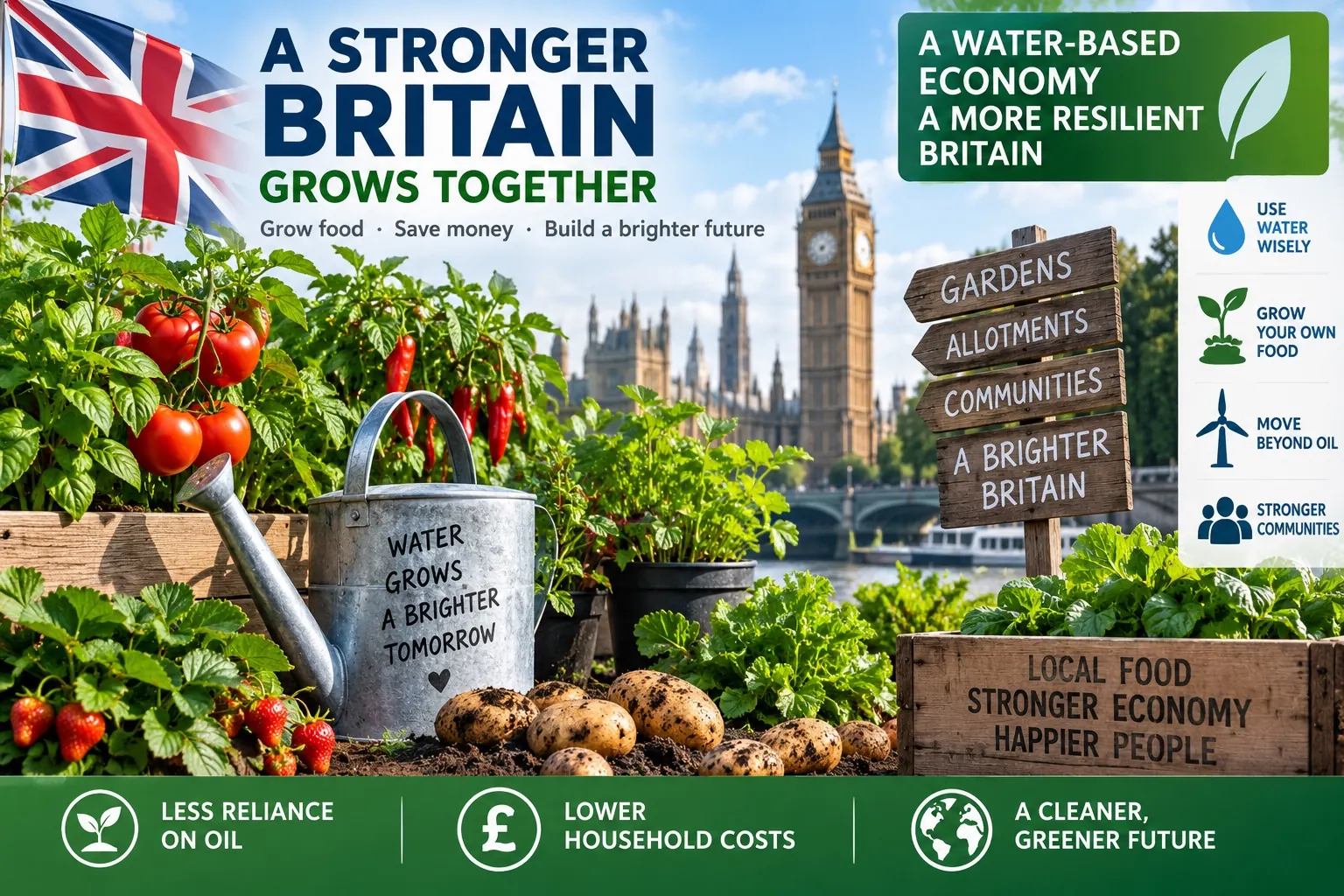
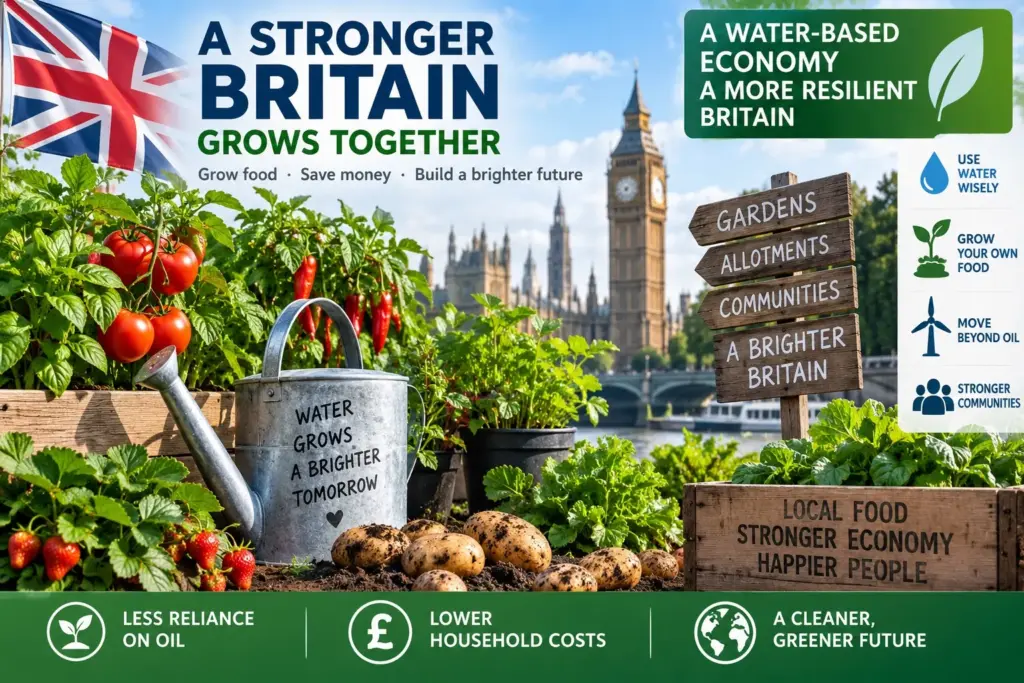
Britain Is Turning a Corner – But We Need a Water-Based Economy
Britain has an opportunity to build a stronger, more resilient economy. One small but practical part of that future could be encouraging more households and communities to grow some of their own food.
We shouldn’t become complacent. Britain still depends heavily on energy, transport and global supply chains to put food on supermarket shelves. When oil and other energy costs rise, those increases can eventually feed through into transport, farming, manufacturing and household costs.
That is why I believe we should start thinking about a water-based economy.
By a water-based economy, I don’t mean abandoning conventional money or industry. I mean making greater use of one of our most fundamental renewable resources—water—to grow food locally and reduce the amount households need to buy and transport.
Grow Some of What You Eat
You don’t need a farm or a huge garden to participate.
Potatoes, chillies, peppers, tomatoes, strawberries and herbs can all contribute something to a household’s food supply. Gardens, allotments, greenhouses, windowsills and indoor growing spaces can all have a role.
During the brighter months we can make use of natural sunlight and rainwater where appropriate. During winter, some crops can be grown indoors with efficient grow lights, although the electricity cost needs to be considered.
The objective isn’t necessarily to become completely self-sufficient. Just grow something.
Every useful crop grown at home is food that doesn’t have to travel hundreds or thousands of miles before reaching your kitchen.
Preparing for a Future Beyond Oil
Oil isn’t going to disappear overnight, and growing vegetables at home won’t replace Britain’s need for energy. But reducing unnecessary dependence on fossil fuels and long-distance supply chains can form part of a broader transition towards renewable energy and greater resilience.
If oil becomes substantially more expensive, businesses and households that depend heavily on it can face higher costs. Preparing gradually is much easier than waiting until those costs become a crisis.
Solar power, wind power, electrification, efficient homes and more local food production can all contribute to that transition.
Water Can Produce Real Value
Water, soil, seeds and light can turn a tiny seed into food.
That’s the principle behind my idea of a water-based economy: use renewable resources intelligently to create useful things locally.
Imagine millions more British households growing even a modest amount of food. It wouldn’t replace British agriculture or supermarkets, but collectively it could increase food resilience, teach valuable skills and help some families reduce their grocery bills.
Britain has the opportunity to build an economy that is less vulnerable to volatile fossil-fuel prices and more efficient with the resources available to us.
Use the sun. Collect rainwater responsibly. Grow food. Use renewable electricity. Save money where you can.
The transition doesn’t have to happen overnight. It can start with a pot, some soil, some water and a seed.
Grow some of your own food and help build a more resilient Britain.


