
Stovin Proposes “New Soil”: A New Approach to Affordable Home Ownership
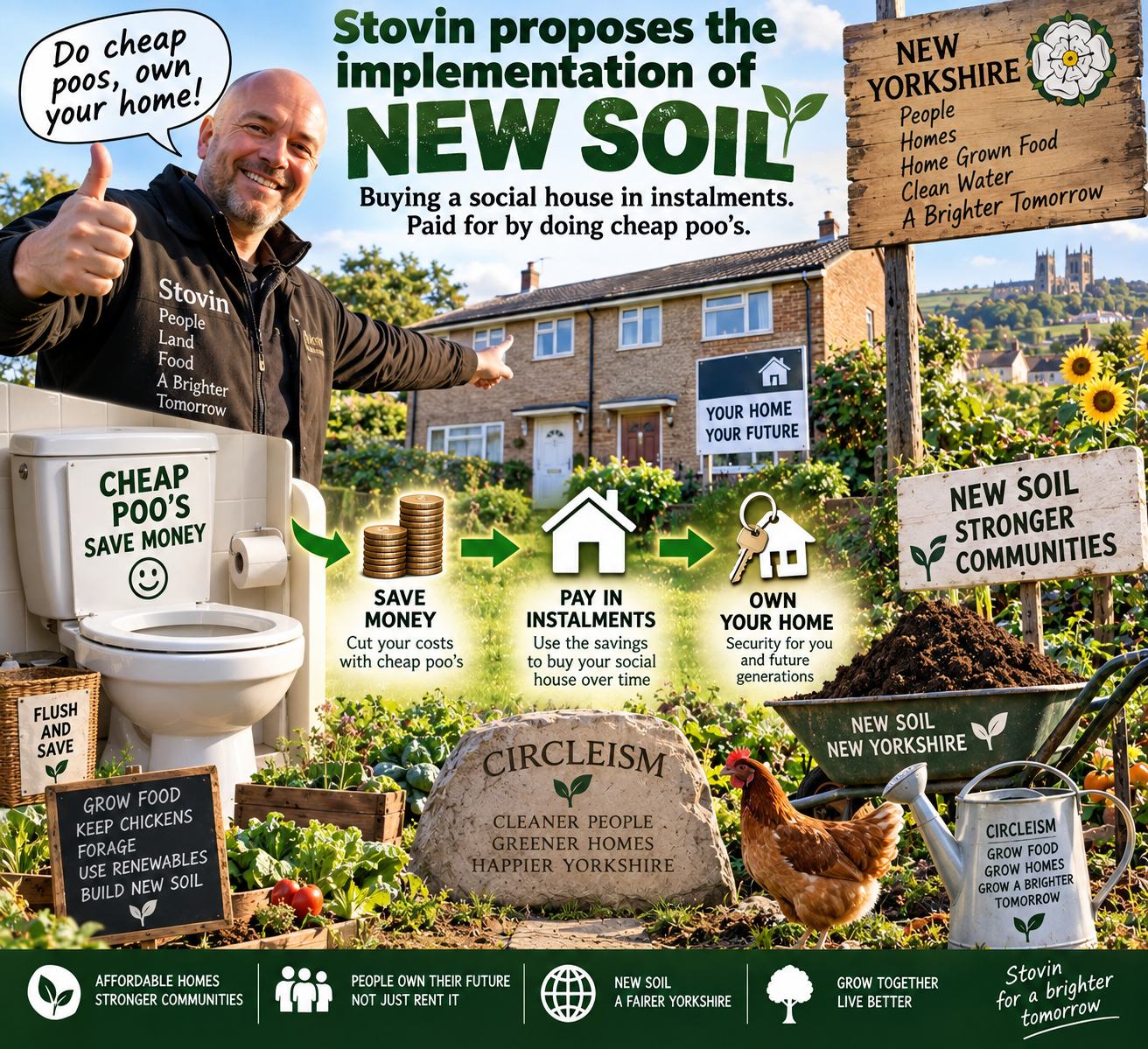
Stovin is proposing an idea called “New Soil”: helping people living in social housing move gradually towards home ownership through manageable instalments rather than expecting them to find a huge amount of money all at once.
The idea fits into Stovin’s wider vision for New Yorkshire and a water-based economy—reduce everyday costs, waste less, grow more of your own food and use the money you save to build greater financial security.
From Social Rent to a Stake in Your Home
For many people, buying a house can feel impossibly far away. Deposits are expensive, mortgages can be difficult to obtain, and the cost of everyday life makes saving harder.
New Soil asks whether there could be another route.
Instead of remaining a tenant indefinitely, an eligible social-housing resident could potentially make affordable payments that gradually purchase a stake in their home. Over many years, those instalments could increase their ownership.
Any real scheme would, of course, need to work within existing housing law, mortgage rules and the rights of social-housing tenants. But the principle is simple:
Give ordinary people a realistic route from renting towards ownership.
“Do Cheap Poos”
Circleism expresses the savings side of the idea with some Yorkshire humour:
Do cheap poos. Save money. Pay towards your home. Build New Soil.
“Cheap poos” doesn’t mean using human waste to make soil. Poo belongs down the toilet. Instead, it’s a humorous slogan for keeping the basic costs of everyday life down.
That could mean growing potatoes and vegetables, keeping chickens for eggs where appropriate and permitted, foraging responsibly, reducing unnecessary consumption, conserving energy and water, and using renewable energy where practical.
A few pounds saved here and there might appear insignificant. But consistently reducing household expenditure can leave more money available for savings and housing costs.
What Does “New Soil” Mean?
In this proposal, soil represents land, security and having a stake in the place where you live.
Someone who eventually owns their home has an asset rather than simply another monthly bill. It can provide greater stability and potentially something to leave to the next generation.
The wider New Soil philosophy therefore becomes:
Save → Pay in instalments → Build ownership → Gain security.
This shouldn’t come at the expense of maintaining an adequate supply of genuinely affordable social housing. A workable policy would have to balance opportunities for ownership with the continuing need for homes for people who need to rent.
Growing a More Self-Reliant Yorkshire
New Soil also connects housing with Stovin’s broader sustainability message.
Imagine communities where more households grow a little food, chickens provide local eggs where suitable, people make responsible use of edible wild foods, homes consume less energy, and renewable electricity supplies an increasing share of what remains.
None of these measures will individually solve Britain’s housing or cost-of-living problems. Together, however, they represent a philosophy of reducing dependence, lowering costs and building assets over time.
That is the idea behind New Soil:
Affordable homes. Stronger communities. More local food. Less waste. Greater security.
And, in Stovin’s deliberately cheeky version:
Flush, save and put the money towards something that lasts.


