If I Don’t Have Children, Give Me Another Chance at Life
Having children is one of the biggest hopes I have for my future. I would like the opportunity to become a father, raise a family and leave something of myself behind for another generation.
But what if that never happens?
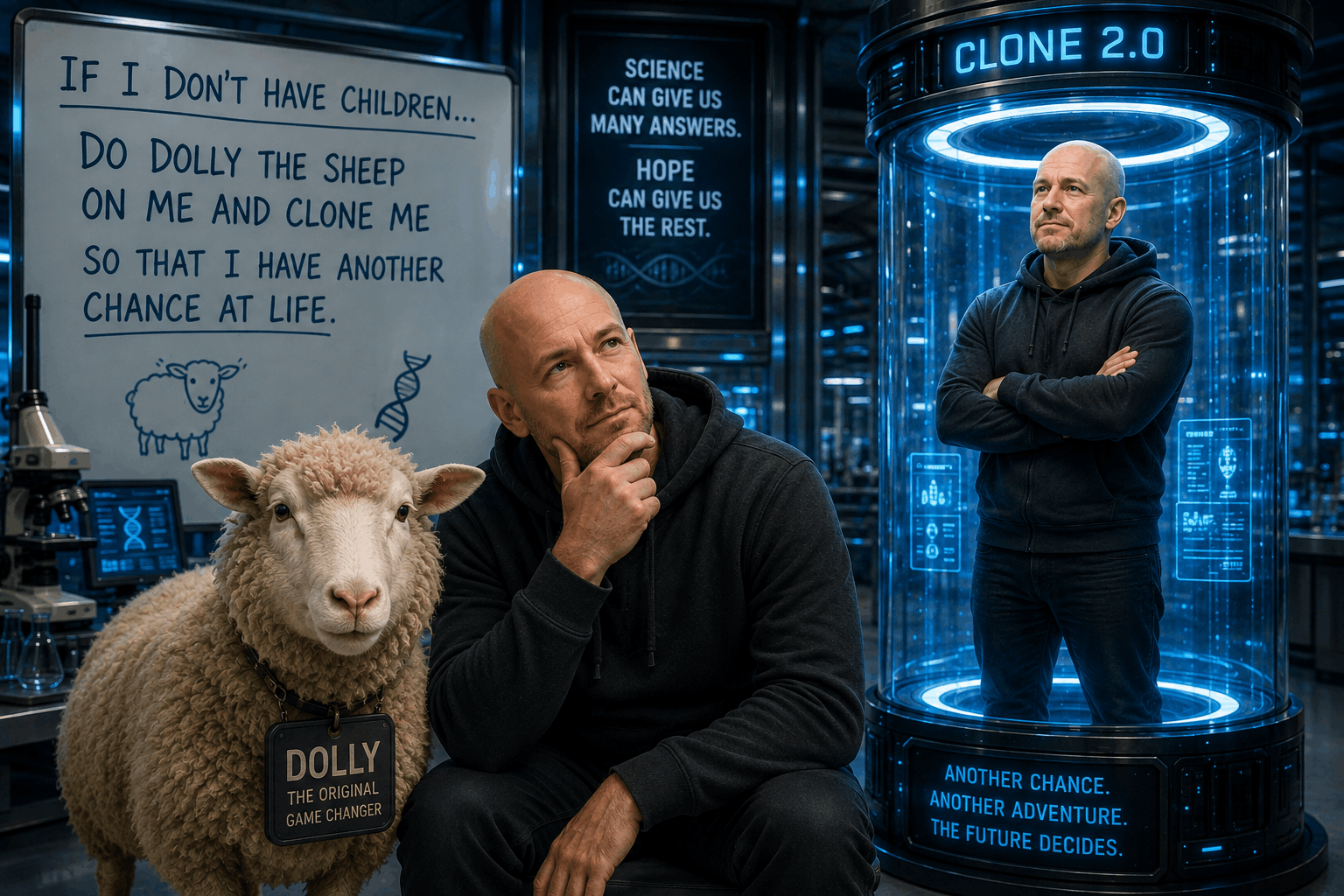
Then I have a rather unusual request for the scientists of the future: do a Dolly the sheep on me. Clone me and give me another chance at life.
Dolly the sheep became famous in the 1990s as the first mammal cloned from an adult somatic cell. It was a remarkable scientific achievement that demonstrated just how much biological information is contained within an ordinary cell.
Human reproductive cloning is not an available or accepted way to reproduce today, and a clone would not literally be the same person starting life again. They would be a genetically very similar new individual, growing up with their own experiences, personality and choices.
Still, as a thought experiment, there is something fascinating about it.
If I reach the end of my life without having children, perhaps my DNA could survive for a future generation of scientists to study. Maybe technology hundreds of years from now will be capable of things that seem impossible today.
A clone wouldn’t give me a second life in the literal sense. But the idea raises a much bigger question: how much of us can science preserve after we’re gone?
Genes are only part of a person. Our memories, relationships, decisions, successes and mistakes shape us too. If humanity ever develops technology capable of recreating someone’s genetics, the resulting person should still have the freedom to decide who they want to become.
So my message to the future is partly serious and partly playful:
If I never manage to have children, remember Lee Stovin. And if cloning technology ever becomes safe, ethical and lawful, perhaps my DNA can have another adventure.
Not immortality.
Not exactly reincarnation.
Just one extraordinary possibility for the distant future.


