
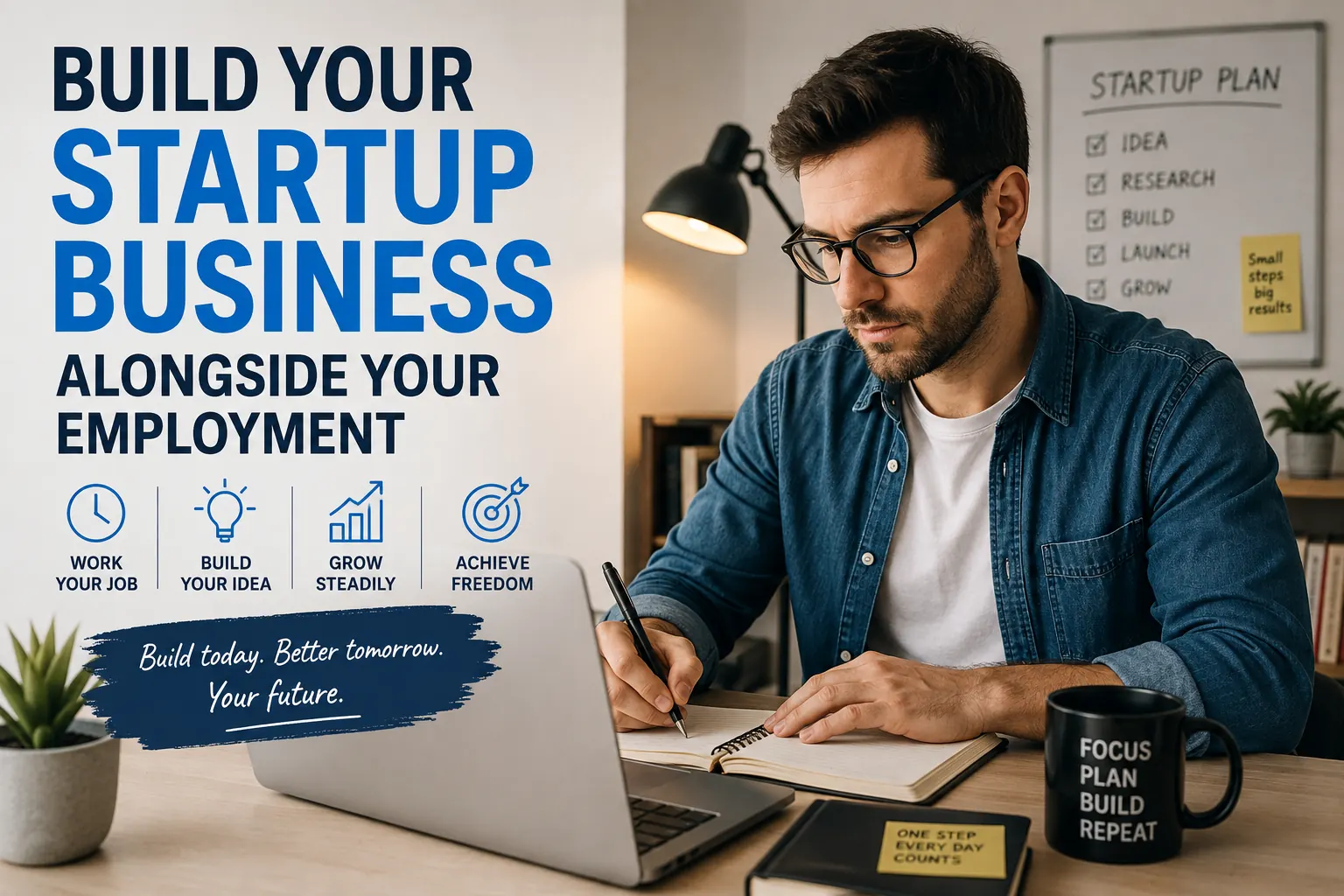

Build Your Startup Business Alongside Your Employment
Starting a business doesn’t always mean handing in your notice and taking a huge financial risk. For many entrepreneurs, a more practical approach is to build a startup alongside existing employment.
Your job can provide the income and stability you need while your new business develops. Instead of expecting a startup to immediately pay your bills, you can give it time to find customers, improve its offering and establish a reputation.
Let Your Employment Fund the Startup Phase
One of the biggest challenges for a new business is cash flow. If you already have a regular salary, you may be able to use a small proportion of your disposable income to gradually invest in your business.
That could include paying for:
- A domain name and website
- Branding and graphic design
- Advertising and marketing
- Software and equipment
- Professional services
- Networking and business development
The important point is to remain financially disciplined. You don’t necessarily need to invest thousands of pounds immediately. Build gradually and concentrate spending on things that can genuinely help the business grow.
Start With Evenings and Weekends
The early stages of many businesses can be developed outside normal working hours.
An hour in the evening could be spent improving your website, writing useful content, contacting potential customers or developing your product. Weekends can provide longer periods for working on larger projects.
Consistency matters more than trying to do everything at once. Five productive hours every week becomes more than 250 hours of work over a year.
Build the Customer Base Before Making the Jump
Employment can give you something extremely valuable: time to prove that your business works.
Rather than quitting your job because you have a business idea, you can test whether people are actually willing to pay for it.
Your first objective might be one customer. Then five. Then ten.
As the business develops, you can track revenue, profit, repeat customers and enquiries. Eventually, you may reach the point where the numbers demonstrate that working on the business full-time is a realistic option.
Protect Your Reputation and Your Employment
Always check your employment contract before starting a business on the side. Some employers have restrictions concerning outside work, conflicts of interest, intellectual property or working with competitors.
Keep your startup separate from your employer. Don’t use company time, equipment, customer information or other resources for your own business unless you have explicit permission.
Building something independently and professionally creates much stronger foundations.
Reinvest Rather Than Overspend
When your startup begins generating money, consider reinvesting some of the profits.
A £500 project could help pay for better equipment. A larger contract could fund advertising. Growing revenue could eventually allow you to outsource specialist work or employ someone.
This creates a gradual cycle:
Employment → investment → customers → revenue → reinvestment → growth
Over time, the business becomes less dependent on your salary and increasingly capable of supporting itself.
Don’t Rush the Transition
There is sometimes a romantic idea that entrepreneurs must quit their jobs, risk everything and devote themselves completely to their startup.
That isn’t the only way to build a successful company.
Keeping your employment while developing a business can reduce financial pressure and allow you to make decisions based on what is best for the company rather than desperately needing immediate income.
When the startup becomes established enough, you can decide whether to remain employed, reduce your working hours or move into the business full-time.
Build Before You Leap
A startup doesn’t have to begin with a dramatic leap into the unknown.
It can begin with one evening, one website, one customer and one sale.
Keep earning. Keep learning. Keep building.
Then, if the business eventually becomes strong enough to replace your employment income, you’ll be making the transition with something far more valuable than enthusiasm:
You’ll have a business that has already proved it can work.


