
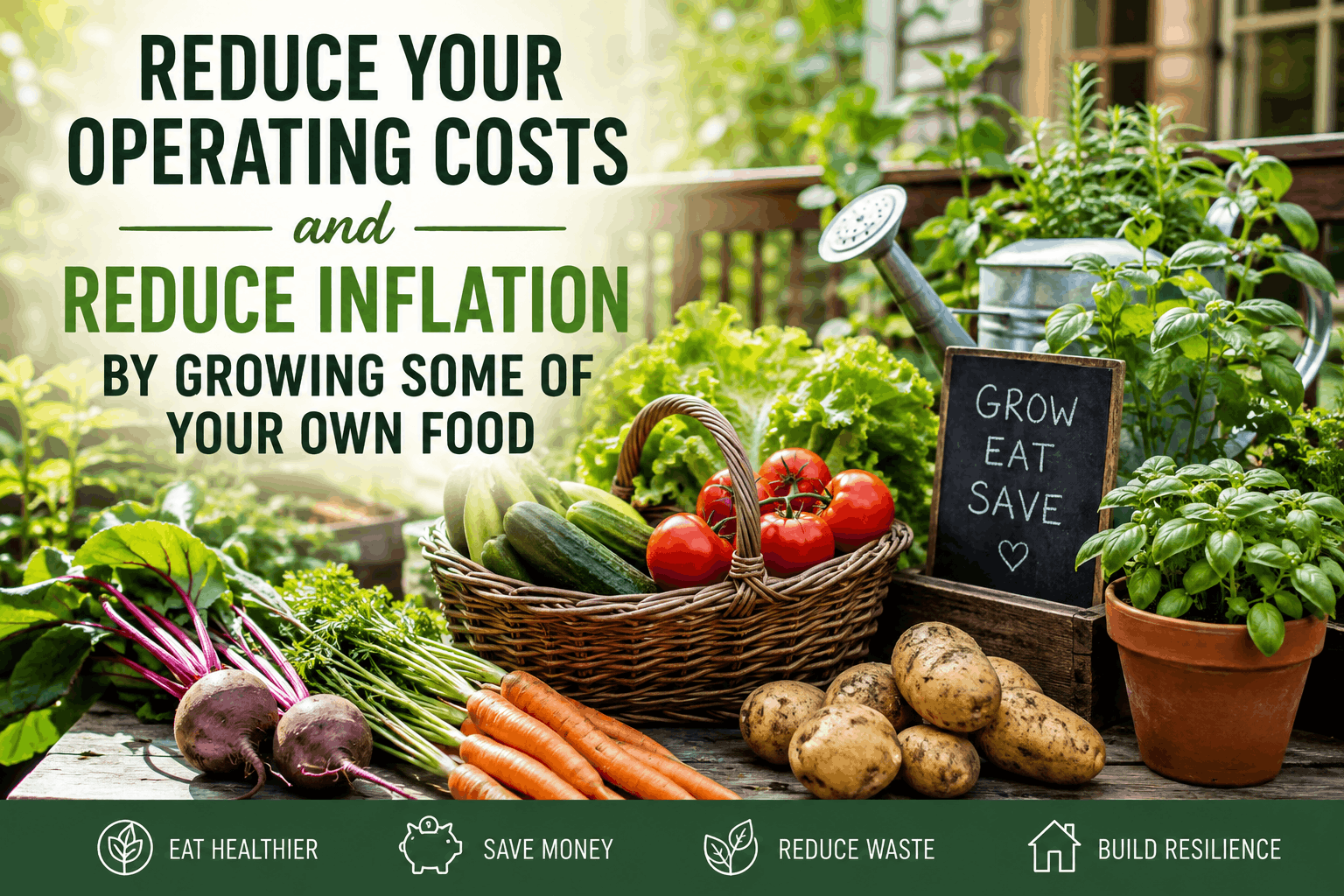
Reduce Your Operating Costs and Reduce Inflation by Growing Some of Your Own Food
The cost of living affects almost everything. Food prices rise, energy becomes more expensive, wages come under pressure and businesses face higher operating costs. While growing your own food isn’t going to eliminate inflation, it is one practical way households can reduce their dependence on rising supermarket prices.
Produce More, Buy Less
The principle is simple: the more useful things you can produce yourself, the fewer things you need to buy.
You don’t need a farm or even a large garden. Depending on your space, you could grow:
- Potatoes
- Tomatoes
- Chillies
- Strawberries
- Lettuce and salad leaves
- Mint and other herbs
- Spring onions
- Beans
Some crops can even be grown in containers, pots, window boxes or indoors.
Every successful harvest replaces at least a small amount of supermarket spending. One tomato isn’t going to transform your finances, but repeatedly producing food throughout the year can make a noticeable contribution.
Think of Your Home Like a Small Business
Businesses constantly look for ways to reduce operating costs. Households can use the same principle.
Food is one of the regular costs of running a household. If you can produce some of that food yourself, you are effectively reducing your household’s operating expenses.
Growing £5 worth of vegetables might not sound particularly exciting. But do it repeatedly with potatoes, tomatoes, herbs, chillies, salad and fruit and the savings begin to accumulate.
There are other potential benefits too. Seeds can produce multiple plants, plants can produce multiple harvests, and some varieties can be grown again the following year.
Can Growing Food Reduce Inflation?
One household growing tomatoes isn’t going to change the national inflation rate. However, the economic principle behind growing your own food is interesting.
Inflation becomes particularly painful when demand for essential products exceeds available supply or when the cost of producing and transporting those products increases.
Increasing local food production adds a little more supply while reducing some household demand for commercially produced food.
Imagine millions of households producing even a small percentage of their vegetables, fruit and herbs. Collectively, that’s a meaningful amount of additional food production.
Home growing should therefore be seen as one small tool among many, rather than a complete solution to inflation.
Start Small and Grow What You Actually Eat
There is little financial benefit in growing something that eventually gets thrown away.
Start with foods you regularly buy. If you use tomatoes every week, try growing tomatoes. If you frequently buy potatoes, experiment with a container of potatoes. If you regularly purchase herbs, a few pots on a windowsill could be an easy starting point.
Keep your initial costs sensible too. The objective is to reduce expenditure, not spend hundreds of pounds producing £20 worth of vegetables.
Turning Consumers Into Producers
Modern economies encourage us to buy almost everything we need. Growing food introduces a different idea: you can be a producer as well as a consumer.
A household that produces some of its own food becomes slightly less exposed to changing supermarket prices and supply problems.
You still need shops, farmers and the wider food industry, of course. Home growing simply complements them.
Grow a Little, Save a Little
You don’t have to become self-sufficient.
Grow a few potatoes. Pick your own tomatoes. Keep some herbs on the windowsill. Grow strawberries in containers. Experiment and find out what works.
The individual savings might initially seem small, but the philosophy is powerful:
Reduce waste. Reduce operating costs. Produce more locally. Buy a little less.
When prices are rising, growing some of your own food is one practical way of taking greater control over part of your household budget.
And when millions of people find small ways to become more productive and efficient, those little savings can add up to something much bigger.


